In modern warfare, the outcome is determined not only by the number of personnel or the availability of equipment. The key role is played by the ability to systematically, continuously and quickly provide combat units with everything they need. That is why logistics is one of the fundamental elements of defense capability.
1. Logistics as a system, not a separate action
Logistics is not just about getting from point A to point B.
It is a complex system that encompasses:
- route planning;
- transport management;
- fuel supply;
- repair and maintenance;
- reserve and replacement of resources;
- coordination between units and the rear.
Any failure in this system instantly affects the combat capability of the unit. A delay in fuel, faulty transport or lack of reserves can disrupt the performance of a combat mission at a critical moment. That is why logistics requires constant control, operational decisions and the readiness to quickly adapt to changing conditions on the front.
In military realities, logistics processes operate in an environment of increased risks. Routes can change daily, equipment can fail at the least expected moment, and the needs of units can grow or transform depending on the situation. Effective logistics allows you to reduce these risks and ensure continuity of supply even in difficult conditions.
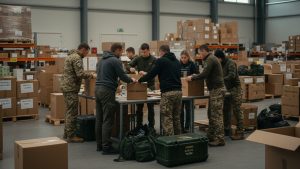
2. Time as a strategic resource
On the front lines, time is often of the essence. Delayed deliveries can disrupt rotations, cause equipment to be unavailable, or prevent the ability to respond quickly to changing situations. Effective logistics create a predictable rhythm that allows units to operate confidently even in challenging conditions.
A clear rhythm of delivery reduces uncertainty for soldiers. When a unit knows that support will arrive on time, it directly impacts operational planning and the psychological resilience of its personnel.
3. War of Attrition and the Role of Supply
Modern warfare is a war of attrition. In such conditions, the winner is not the one who has more resources at once, but the one who is able to sustainably restore them and adapt to changes. Logistics becomes not only a means of support, but also a factor of strategic influence on the course of hostilities.
It is logistics that allows you to reduce the effect of losses, compensate for damage to equipment and quickly respond to changes in the intensity of hostilities. Without this, even significant resources lose their value.
4. Flexibility in changing frontline conditions
Modern warfare is a war of attrition. In such conditions, the winner is not the one who has more resources at once, but the one who is able to sustainably restore them and adapt to changes. Logistics becomes not only a means of support, but also a factor of strategic influence on the course of hostilities.
It is logistics that allows you to reduce the effect of losses, compensate for damage to equipment and quickly respond to changes in the intensity of hostilities. Without this, even significant resources lose their value.
5. The human factor in logistics processes
Behind every logistics decision are people – drivers, coordinators, technical specialists. Their experience and responsibility not only determine the timeliness of delivery, but also the safety of those on the front line.
In many cases, it is human decisions made in difficult circumstances that save cargo, equipment or lives. Therefore, logistics is not only about systems, but also about trust in the team.
6. Constant need for support
Logistics requires continuous resources. Vehicles wear out, equipment breaks down, routes change. Without regular updates and funding, even a well-established system quickly loses its effectiveness.
Logistics support is a long-term process that cannot be closed with one-time solutions. It requires planning, stable funding sources, and constant attention.